
Flagship service
Rubber (EPDM) roof coating & restoration
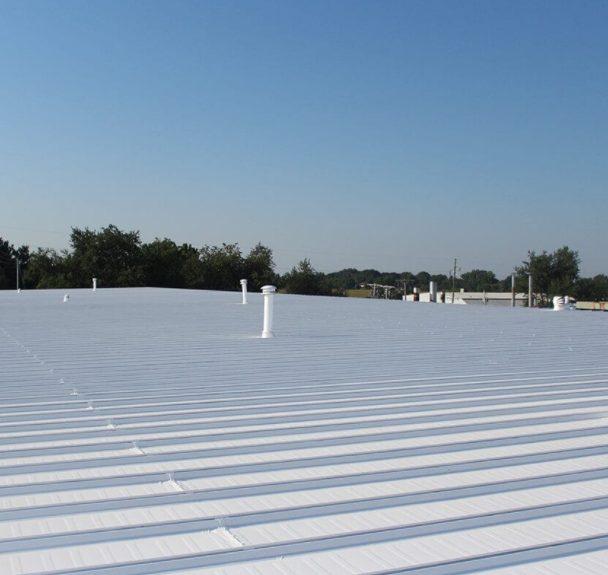
EPDM rubber roof coating restores an aging synthetic rubber membrane by sealing its seams and adding a reflective, waterproof top layer — without tearing off the existing roof.
- Seam-first restoration
- Stops UV & ozone degradation
- 50–70% less than replacement
- CCC1327130
Last updated
What EPDM restoration involves
EPDM rubber roof coating restores an aging synthetic rubber membrane by sealing seams and adding a reflective, waterproof top layer without tearing off the existing roof.
EPDM — ethylene propylene diene monomer — is the black synthetic rubber membrane found on a huge share of commercial flat roofs built since the 1980s. It is durable, but it ages in three specific and predictable ways, and a restoration system has to address all three or it will fail early.
The three failure modes we treat
Seams first. EPDM sheets are bonded to each other with adhesive or seam tape, and that bond degrades long before the rubber itself does. Nearly every EPDM leak we diagnose starts at a seam, a corner or a penetration flashing — not in the open field.
Shrinkage. As EPDM ages it contracts. Over a 20-year life that shrinkage pulls the membrane away from perimeter walls, curbs and drain flanges, stressing flashings until they tear.
UV and ozone hardening. Constant sun and ozone exposure stiffens the rubber and strips its plasticizers. A once-flexible membrane becomes brittle and splits at any point where the roof moves — exactly what Florida's daily thermal cycle guarantees.
A coating alone does not fix any of that. That is why our EPDM work is seam-first: reinforce the details, then coat the field.
Our EPDM process
Seams first, field second
The order of operations is what separates a restoration that lasts 20 years from a coating that peels in three.
- 1
Survey & moisture check
We map seam condition, shrinkage at the perimeter, flashing integrity and drainage — and confirm the insulation below the membrane is dry. Wet insulation disqualifies a roof from restoration.
- 2
Clean, prime & reinforce
The membrane is cleaned of oxidized surface film, primed for adhesion, then every seam, corner, curb and penetration is reinforced with embedded fabric and detail coating.
- 3
Coat & warranty
A reflective waterproof topcoat is applied over the full field at spec thickness, sealing the reinforced details into one continuous membrane — then documented with a 10, 15 or 20-year warranty.
Is your roof a candidate?
Signs an EPDM roof should be restored now
The window for restoration closes once water reaches the insulation. These are the indicators we look for on a first inspection.
- Seams that are open, lifting or visibly separated
- Membrane pulling away from walls, curbs or drains
- A chalky, hardened or brittle surface
- Small splits or cracks at stress points
- Active or intermittent interior leaks
- Ponding water lingering 48+ hours after rain
- Patch-on-patch repair history
- A membrane 15+ years old with a sound deck
Silicone vs. EPDM restoration
Which system your roof gets, and why
Both are fluid-applied restoration systems installed over the existing roof. The substrate and its failure pattern decide which one is specified.
| Consideration | 100% Silicone | EPDM Restoration |
|---|---|---|
| Best suited to | Ponding water, mixed or metal substrates | Aging rubber membranes with failing seams |
| Primary failure it solves | Standing water and UV breakdown | Seam separation, shrinkage, ozone hardening |
| Preparation emphasis | Cleaning and adhesion testing | Seam and flashing reinforcement |
| Primer | Not required on most substrates | Typically required for adhesion to aged rubber |
| Finish | Reflective white seamless membrane | Reflective waterproof top layer |
| Warranty available | 10 / 15 / 20 years | 10 / 15 / 20 years |
An EPDM rubber roof coating restores an aging synthetic-rubber membrane by sealing its seams and flashings and adding a reflective, waterproof top layer over the existing roof. The difference from a standard silicone job is the preparation: EPDM demands seam-first reinforcement and a compatible primer, because the failure points on rubber roofs are almost always the seams, shrinkage at the perimeter, and UV/ozone-hardened surfaces rather than the field of the membrane.
An EPDM roof can almost always be coated rather than replaced, as long as the deck and insulation are dry and the membrane is still adhered. Replacement becomes the better option when the membrane has shrunk enough to pull flashings away from walls and curbs, or when moisture surveys show widespread saturated insulation under the rubber.
EPDM roofs almost always fail at the seams first, not in the middle of the sheet. Older adhesive-bonded seams lose adhesion over time, the membrane shrinks as it ages and pulls at perimeter flashings, and constant UV and ozone exposure hardens the surface until it becomes brittle and prone to splitting at stress points.
Yes — coating an EPDM roof typically costs 50 to 70% less than a full tear-off and replacement. The savings come from eliminating demolition labor, disposal fees and the insulation replacement that a tear-off usually triggers, and from avoiding the business disruption of an open roof deck.
Yes. Qualifying EPDM restorations carry the same 10, 15 and 20-year leak-free labor and material warranties as our silicone systems. The term offered depends on the membrane's remaining condition, the extent of seam repair required, and the specified coating thickness.
Next step
Get your EPDM roof assessed
We will tell you honestly whether your rubber roof can be restored or genuinely needs replacement — and put either answer in writing.
Request an EPDM Restoration Quote
Tell us about your building and we'll schedule an on-site inspection and written proposal — no cost, no obligation.
Been told your rubber roof needs replacing?
Get a second opinion. Most EPDM roofs with a dry deck can be restored for a fraction of the cost.