
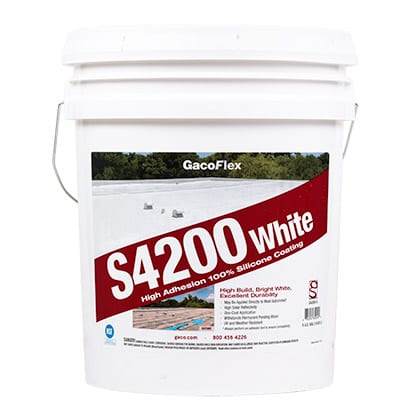
GacoFlex S4200
100% silicone roof coating
Our primary restoration system. A single-component, high-solids silicone that cures into a seamless membrane, withstands permanent ponding water, and needs no primer on most substrates.
Commercial rubber & silicone roof coating · Jacksonville, FL · License CCC1327130
10, 15 & 20-year leak-free labor and material warranties
Flagship service
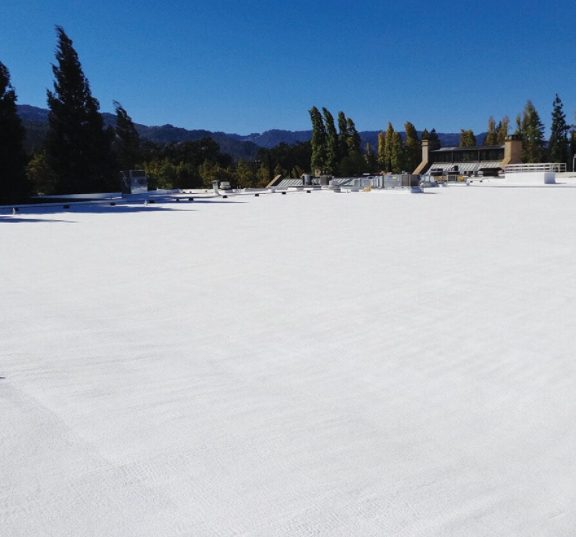
GacoFlex S4200 is a 100% silicone roof coating that creates a seamless, waterproof membrane over an existing roof — without a full tear-off, and without shutting your building down.
Last updated
GacoFlex S4200 is a 100% silicone roof coating that creates a seamless, waterproof membrane over existing roofing without requiring a full tear-off.
It is a single-component elastomeric coating — meaning it arrives ready to apply, cures with atmospheric moisture, and stretches with the roof as it expands and contracts through Florida's daily heat cycle. Once cured it is one continuous membrane with no laps, no fasteners and no seams for water to find.
That matters because the failure points on a commercial roof are almost never the middle of the field. They are the seams, the flashings, the pipe penetrations and the low spots where water sits. A fluid-applied silicone system seals all of them at once.
Silicone is the only common coating chemistry that holds up under permanent ponding water. Acrylic coatings re-emulsify — they soften and wash away when water stands on them — which makes them a poor fit for the low-slope roofs that dominate Florida commercial construction. Silicone also resists UV breakdown indefinitely, where urethanes chalk and degrade with sustained sun exposure.
Application process
Coating failures are almost always preparation failures. The application itself is the shortest part of the job.
We survey the membrane, seams, flashings and drainage, check for saturated insulation, and run adhesion tests on the actual substrate so the system is specified to what is really up there.
The roof is pressure-cleaned to remove dirt, chalk and biological growth. Open seams, blisters, splits and penetrations are repaired and reinforced with fabric and detail coating.
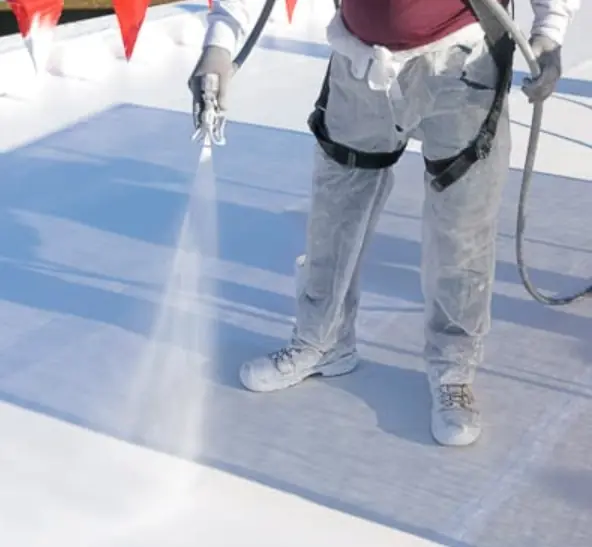
The silicone is sprayed or rolled to the manufacturer-specified mil thickness, verified with wet-film gauges. Thickness is what determines the warranty term — so it is measured, not estimated.
Substrates
One of the practical advantages of the S4200 system is adhesion: on most of these substrates it goes down without a separate primer step, which shortens the project and lowers the cost.
Certified Gaco reseller
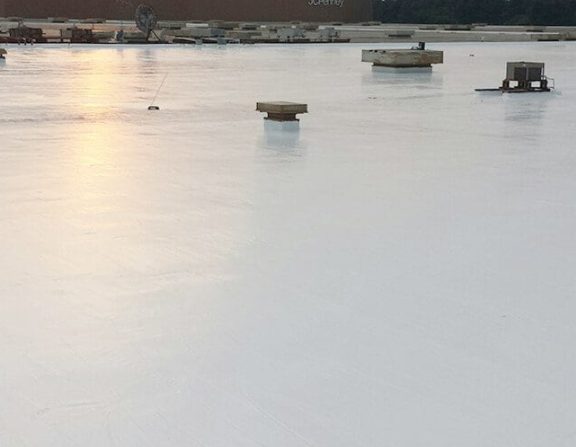
We are a certified Gaco reseller and a manufacturer-trained applicator. Material comes through an authorized channel, and it is installed to the thickness its warranty requires — the two halves of a coating that actually lasts.
100% silicone roof coating
Our primary restoration system. A single-component, high-solids silicone that cures into a seamless membrane, withstands permanent ponding water, and needs no primer on most substrates.
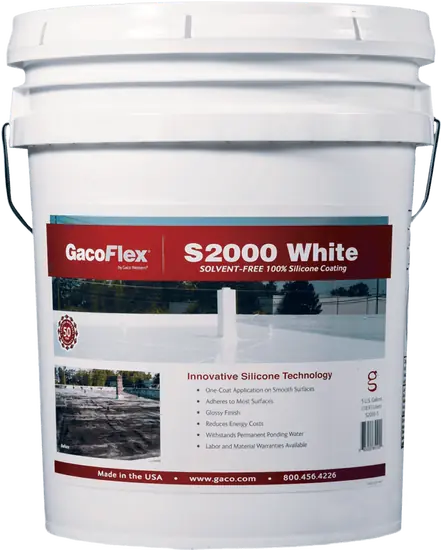
Solvent-free 100% silicone coating
A solvent-free silicone that goes down in a single coat on smooth surfaces and adheres to most substrates. Its glossy white finish reduces energy costs, it withstands permanent ponding water, and labor and material warranties are available on qualifying roofs.
Specifying a system for a particular roof, or want the product data sheets before you commit? Talk to us about your roof.
Manufacturer's published figures
These are the manufacturer's own claims for this system, with their qualifiers attached, and what each one actually means for a building owner. We quote them rather than paraphrase them so you can check them against the product data sheet.
compared to tear off and replace
The membrane stays where it is, so there is no demolition, no disposal and no new insulation to buy. That is where restoration's 30–50% of replacement cost actually comes from.
at lower cost than correcting slope
The reason silicone is the default specification on Florida roofs that will not drain. An acrylic in the same low spot re-emulsifies; correcting the slope instead means tapered insulation across the whole roof.
in approvals
UL and FM approval on the assembly, which matters to your insurer and your inspector as much as it does to us. Ask any coating bidder for the product data sheet.
by removing the primer step when applicable
On substrates that take S4200 directly — weathered modified bitumen most of all — the crew cleans and coats instead of cleaning, priming and coating. Fewer days on the roof, less disruption below.
with reflective coating
A dark roof in Florida radiates absorbed heat straight down into the building. A reflective white surface rejects most of that solar load before it ever becomes a cooling bill.
and rising — extends your season
Rarely the binding constraint in Florida, but it matters on a cold-snap morning and on our north Georgia work, where it keeps a scheduled job from slipping a week.
Source: Gaco's published case study on the Eatonville, FL church roof we restored with this system. Gaco is a Firestone Building Products brand. Read that project.
Cost factors
There is no honest per-square-foot number without seeing the roof. These four variables account for nearly all of the spread between quotes.
Larger roofs cost less per square foot — mobilization and setup are fixed costs spread across the area.
A sound membrane needs cleaning and detail work. A roof with widespread blistering, open seams or wet insulation needs far more prep, and sometimes needs replacement instead.
A 20-year warranty requires more material on the roof than a 10-year system. Thickness is the single biggest material cost driver.
Rooftop equipment, curbs, drains, skylights and multi-level roofs all add detail labor that a simple open field does not.
Before you sign anything
The manufacturer's own checklist, not ours — which is exactly why it is worth applying to us as readily as to anyone else bidding your roof.
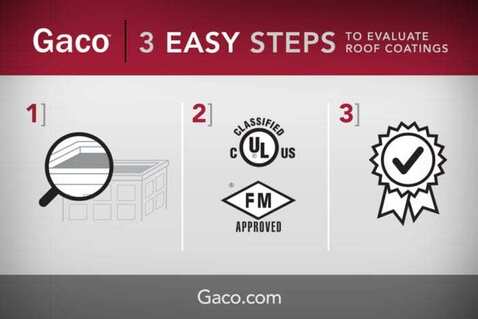
Have the roof's current condition properly assessed — surface, seams, penetrations, drainage and the insulation below. Some manufacturers, Gaco included, will send a technical team for a free roof evaluation report. A coating over wet insulation traps the problem instead of solving it.
Ask for the product data sheet, not a brochure. GacoFlex S4200 carries industry-leading fire performance in approvals, and those approvals are what an insurer and a plans examiner will want to see.
Coating warranties are only valid when the system is installed by a trained applicator licensed through the manufacturer's network, to the specified thickness. Verify the license before you sign anything.
Have a professional check the roof after storms or hail. Prompt repairs and an annual maintenance program or inspection prevent the bigger problems that lead to a full reroof.
Silicone roof coating FAQs
Still deciding between coating and replacement? Read the EPDM rubber restoration page or the church roof case study.
A silicone roof coating is a fluid-applied, 100% silicone membrane sprayed or rolled over an existing commercial roof to create a seamless waterproof surface. A properly installed silicone system lasts 15 to 20 years before it needs recoating, and it can be recoated indefinitely rather than torn off — which is why we warranty qualifying roofs for 10, 15 or 20 years against leaks.
No. In the large majority of commercial projects the existing roof stays in place and the coating is applied directly over it after cleaning and repairs. A tear-off is only necessary when the roof deck itself is structurally compromised or the insulation below the membrane is saturated — both of which we check during the free inspection before proposing a coating.
Yes — 100% silicone is the only common coating chemistry that withstands permanent ponding water without breaking down. Acrylic and some elastomeric coatings re-emulsify and soften when water stands on them for days, while silicone remains intact, which matters on the low-slope roofs common across Florida.
Florida Coating Pros offers 10, 15 and 20-year leak-free warranties covering both labor and materials on qualifying roofs. Warranty length depends on the condition of the existing roof, the substrate type and the mil thickness of the system specified — all of which are defined in writing in your proposal before work begins.
Most commercial roof coating projects are completed in three to ten working days, depending on square footage, the amount of seam and flashing repair required, and weather. Because there is no tear-off, the building stays open and occupied throughout — crews work entirely on the roof surface.
Often not. GacoFlex S4200 bonds directly to most substrates, and on weathered modified bitumen it typically needs only spot priming where the surface demands it. Skipping the primer step where it is genuinely not required cuts roughly 20% off installation time, which is fewer days of crews on your roof. TPO is the exception: it is a low-surface-energy membrane, so we run adhesion test patches and select a primer from the results rather than assuming one.
On a Florida building, noticeably — because you are changing what the roof does with the sun rather than adding insulation. A dark roof absorbs solar load and radiates it down into the space below; a reflective white surface rejects most of it before it becomes heat. The building stays cooler and the air conditioning works less, and lower energy use also means less of the air pollution and greenhouse gas that comes with generating it. We will not quote a percentage, because it depends on your insulation, HVAC and how the building is used.
GacoFlex S4200 is permitted for installation from 33°F and rising, which extends the working season at both ends. In Florida that is rarely the binding constraint, but it matters on a cold-snap morning and on our north Georgia work, where it is the difference between a scheduled job going ahead and slipping a week.
Next step
A free on-site inspection tells you whether your roof is a silicone candidate, what warranty term it qualifies for, and what the project costs — in writing.
Tell us about your building and we'll schedule an on-site inspection and written proposal — no cost, no obligation.
Silicone is the only coating chemistry we will install over standing water. Let us confirm your roof is a candidate.