
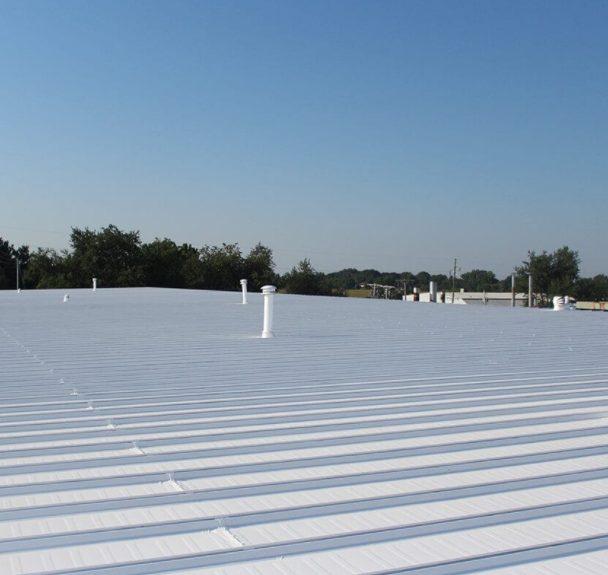
By what is on your building
What kind of roof do you have? We coat all of them
Modified bitumen, built-up, TPO, metal and EPDM rubber all restore with a fluid-applied coating — but they fail in different places and need entirely different preparation. Start with the assembly on your building.
- 5 assemblies
- No tear-off
- 10/15/20-year warranty
- Licensed CCC1327130
The roof type is where the answer starts, not where it ends
Modified bitumen, built-up, TPO, metal and EPDM roofs can all be restored with a coating rather than replaced. What decides it is not the assembly but whether the structural deck is sound and the insulation beneath the membrane is dry.
A 30-year-old modified bitumen roof over dry insulation is a better restoration candidate than a 12-year-old TPO roof over saturated board. Age and type tell us where to look; a moisture survey tells us the answer.
What the roof type does determine is the work. An aging TPO roof needs an adhesion test and a membrane-specific primer. A gravel built-up roof needs the aggregate vacuumed or spudded off before anything can bond. A screw-down metal roof needs thousands of fasteners replaced and sealed. A modified bitumen roof usually needs neither a primer nor much beyond honest detail work. Those are completely different jobs at completely different prices, which is why a square-foot rate quoted without a roof survey tells you very little.
Choose your assembly
Commercial roof types we restore
Each page covers how that assembly fails, the preparation it needs, the system we specify on it, and the conditions that rule restoration out.
TPO
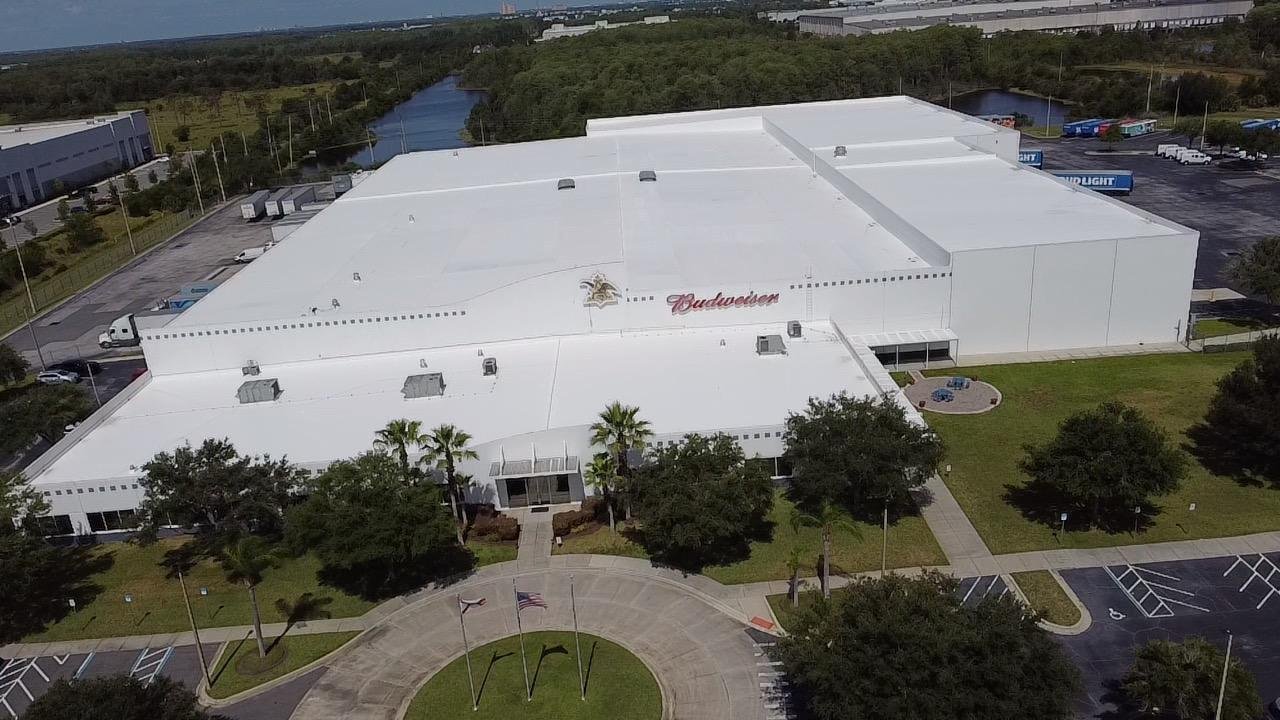
A TPO roof can be coated rather than replaced, and the deciding factor is the condition of the membrane's heat-welded seams and whether the sheet has any reinforcing scrim left above the fabric.
Learn more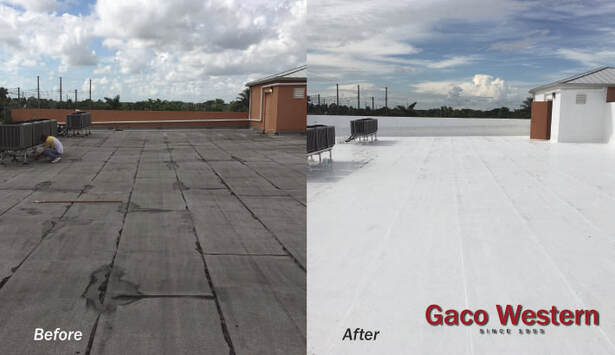
Modified bitumen
Modified bitumen is one of the best coating substrates there is: silicone bonds readily to weathered cap sheet, and a granulated ModBit roof that has lost its reflectivity can usually be restored for a fraction of replacement cost as long as the insulation is dry.
Learn more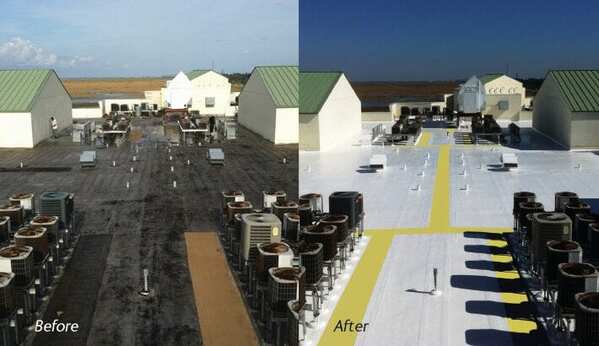
Built-up (BUR)
A built-up roof can be restored with a coating system once the gravel is removed or embedded and the plies are confirmed dry — and because BUR assemblies are thick and multi-ply, they often have more structural reserve left than their age suggests.
Learn more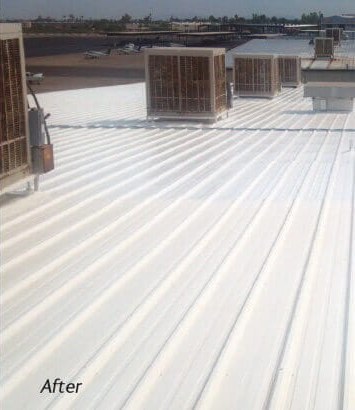
Metal
A metal commercial roof is restored by sealing its fasteners and seams and coating the panels — which stops the rust, eliminates the thousands of individual leak points a screw-down roof has by design, and avoids replacing panels that are usually still structurally sound.
Learn more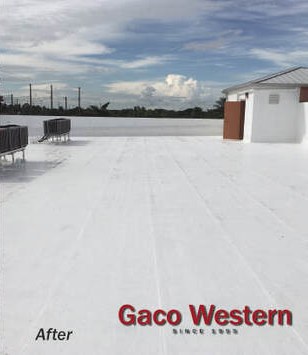
EPDM rubber
EPDM fails at its seams long before the sheet itself goes, so restoration reinforces the details first and coats the field second. Covered in full on the service page.
Learn moreQuick reference
How the assemblies compare
A starting point for the conversation, not a substitute for an inspection.
| Roof type | Typical life | Fails first at | Preparation driver |
|---|---|---|---|
| TPO | 15–20 years | Heat-welded seams | Adhesion test and a membrane-specific primer |
| Modified bitumen | 15–20 years | Granule loss and laps | Wet-area cutout and penetration details |
| Built-up (BUR) | 20–30 years | Exposed bitumen and flashings | Removing or spudding the gravel |
| Metal | 25–40 years (panels) | Fastener washers | Fastener replacement and rust treatment |
| EPDM rubber | 15–25 years | Seams and shrinkage at details | Seam and flashing reinforcement |
Service life figures reflect what these assemblies actually achieve in the Florida climate, which is shorter than the same roof would last further north. A well-drained roof at the top of its range will outlast a badly detailed one at the bottom of the next range up.
Common questions
Roof types, answered
What building owners ask before they know which assembly they have.
Modified bitumen, built-up (BUR), TPO, metal and EPDM rubber can all be restored with a fluid-applied coating system, and so can most roofs that combine several of them. What decides it is never the roof type on its own — it is whether the structural deck is sound and the insulation beneath the membrane is dry. A 30-year-old modified bitumen roof over dry insulation is a better candidate than a 12-year-old TPO roof over saturated board.
Yes, mostly through preparation. Modified bitumen is the cheapest substrate to prepare because weathered asphalt takes silicone readily and often needs no primer. Built-up roofs cost more because the gravel has to be vacuumed or spudded off first. Metal costs more where thousands of fasteners need replacing and sealing. TPO adds a primer and an adhesion test. The coating itself is a smaller share of the number than the prep.
That is common on buildings that have been extended, and the transitions between the assemblies are usually where the leaks are — mismatched materials, different rates of thermal movement and awkward drainage all meeting in one detail. A single silicone system can run across the whole roof, which removes the transition as a separate point of failure rather than patching it again.
You often can from the ground or a doorway onto the roof. Loose stone means a built-up roof. Dark rolled strips about three feet wide that shed coarse granules mean modified bitumen. A thin white or grey sheet with welded seams means TPO. Visible metal panels with exposed screws mean a screw-down metal roof. If it is not obvious, our free inspection identifies the assembly, its condition and its remaining life in writing.
Neither — the condition of the deck and the insulation decides, and both are things you cannot see from the surface. Age and type tell us where to look and what to expect, which is why these pages exist, but the answer for your building comes from a moisture survey and, on older built-up assemblies, a few core cuts. That is what the inspection does before any system is specified.
Not sure what you have?
We will identify it for you
Send a photo of the roof surface and we can usually name the assembly from it. A free inspection confirms the type, its condition, whether the insulation is dry and what system it qualifies for — in writing.
If the roof genuinely needs replacing, the report says so. We would rather lose the coating job than sell one that fails in three years.
Identify My Roof Type
Tell us the building's age and what you're seeing. A photo of the roof surface is the fastest way for us to identify the assembly.
Know your roof type? Start there
Each assembly page covers how it fails, what preparation it needs and when we would tell you to replace instead.